Featured Discussion: From the Past to the Future
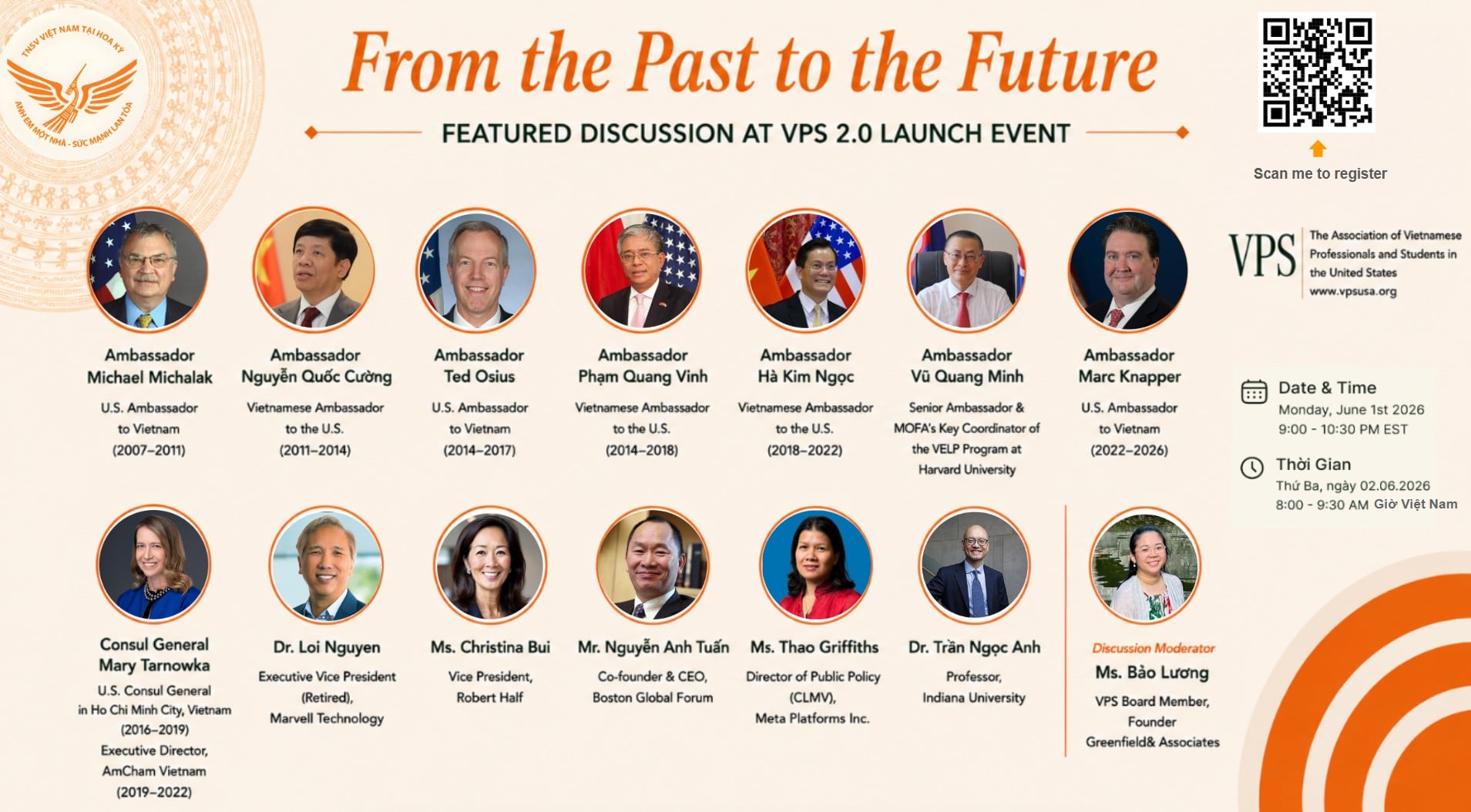
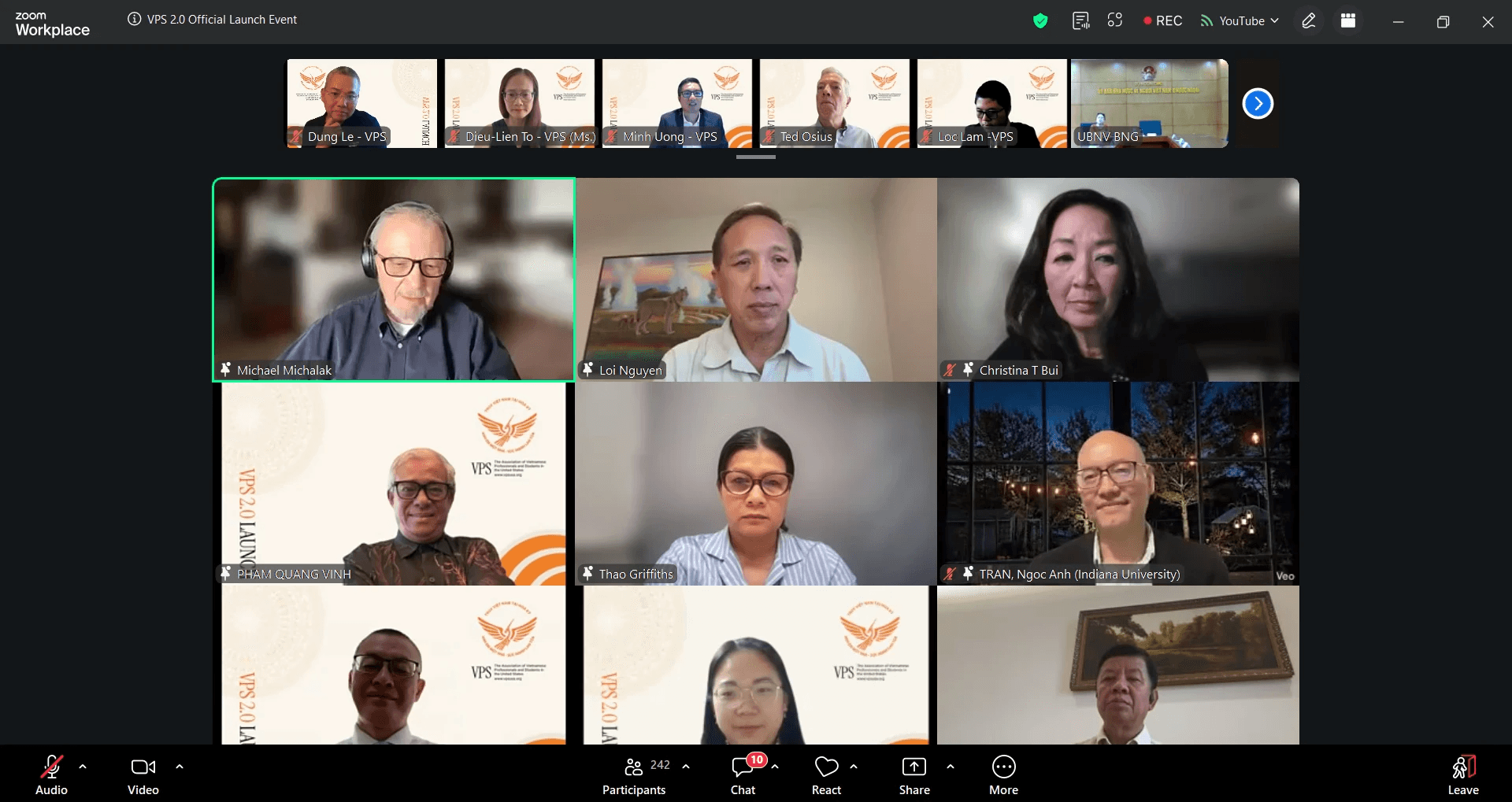
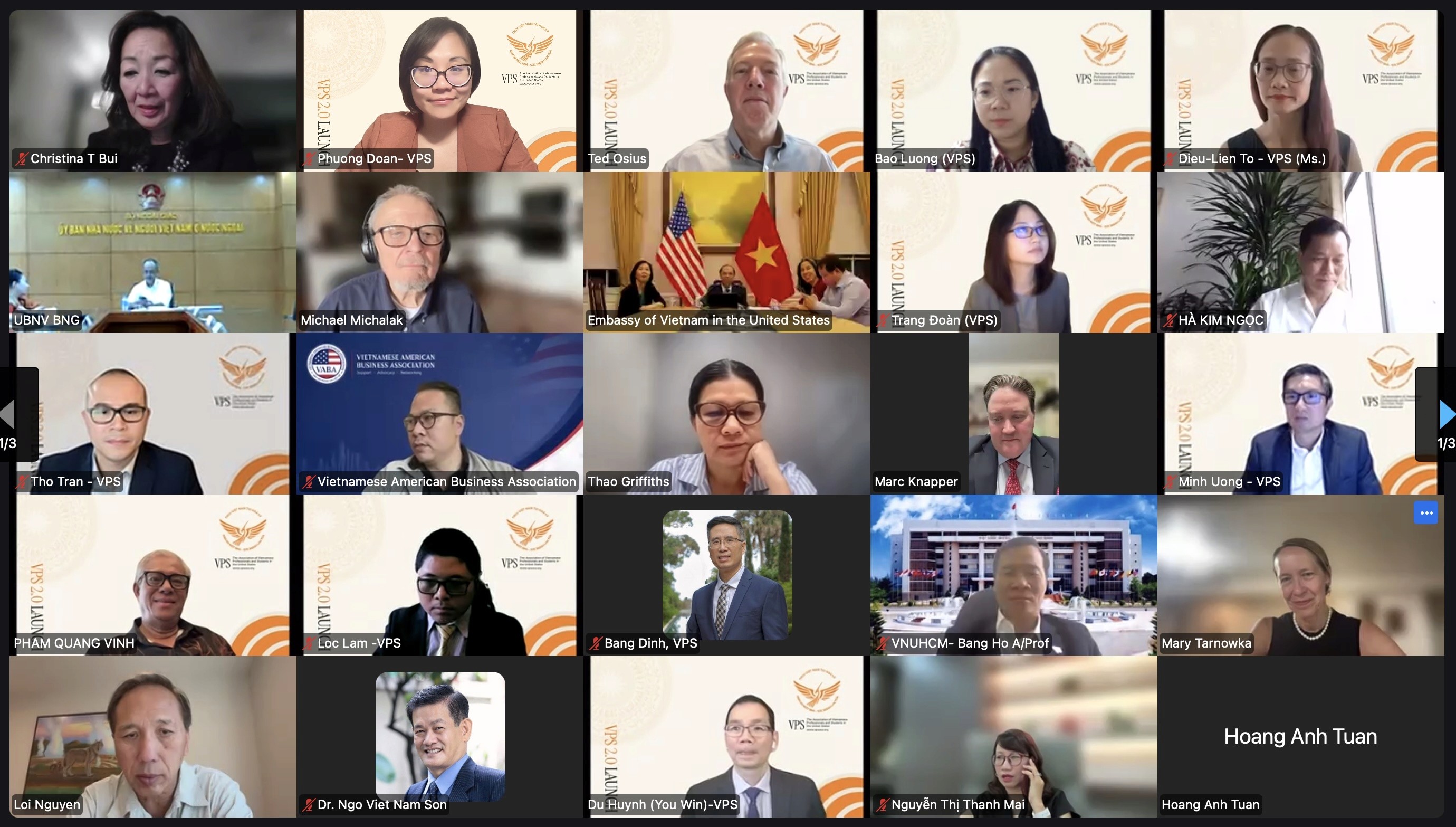
A highlight of the VPS 2.0 Launch Event was the featured discussion, "From the Past to the Future: The Role of Vietnamese Professionals and Students in Advancing the U.S.–Vietnam Partnership." The conversation brought together former U.S. and Vietnamese ambassadors, senior diplomats, business executives, academics, and community leaders to reflect on the evolution of bilateral relations and explore how future generations can contribute to the next chapter of cooperation between the two countries.
Segment 1 – Setting the Foundation
The discussion opened with reflections on the milestones and leadership experiences that helped shape the modern U.S.–Vietnam relationship.
Former U.S. Ambassador to Vietnam Michael Michalak highlighted two achievements from his tenure that continue to have lasting impact today: helping triple the number of Vietnamese students studying in the United States and helping launch the Da Nang Airport Agent Orange remediation project. Drawing from those experiences, he encouraged VPS members to build the right coalitions, establish clear goals, and focus on developing their natural strengths.
Former Vietnamese Ambassador to the United States Nguyễn Quốc Cường reflected on the establishment of the U.S.–Vietnam Comprehensive Partnership in 2013 and the importance of patience, trust-building, and sustained engagement in advancing bilateral relations. He emphasized that future progress will continue to depend on strong people-to-people connections and the contributions of younger generations.
Representing the technology sector, Dr. Loi Nguyen, former Executive Vice President of Marvell Technology, shared lessons from his own journey as an immigrant student, entrepreneur, and technology executive. He challenged participants to pursue excellence at the highest level, emphasizing three principles for success: be the best, be positive, and be a leader. He also stressed the importance of developing communication, leadership, and risk-taking skills in addition to technical expertise, noting that these capabilities often determine who advances into senior leadership positions.
Segment 2 – Driving the Ecosystem
The second segment focused on the ecosystems needed to support innovation, entrepreneurship, workforce development, and economic growth.
Former U.S. Ambassador Ted Osius shared how bringing Google Asia Pacific President Scott Beaumont to Hanoi helped create opportunities that ultimately contributed to Google's expanded presence and manufacturing activities in Vietnam. He emphasized that meaningful progress often requires calculated risk-taking and encouraged future leaders not to view uncertainty as a barrier to opportunity. Ambassador Osius also joined Ambassador Michalak in identifying education and STEM development as among the most important priorities for future U.S.–Vietnam cooperation.
Christina Bui, Vice President at Robert Half, discussed the evolving skills needed for success in an increasingly interconnected world. She identified five critical competencies for professionals working across the U.S.–Vietnam corridor: AI fluency, cultural intelligence amplified by AI, bilingual communication and cross-cultural storytelling, financial and regulatory literacy across both markets, and adaptability. She encouraged VPS to integrate AI applications across all mentorship and leadership development initiatives.
Former U.S. Consul General Mary Tarnowka reflected on the importance of public-private partnerships and collaborative leadership. Drawing on her experience coordinating advocacy efforts by former U.S. ambassadors and AmCham leaders during the COVID-19 pandemic, she described how those efforts contributed to the United States donating more than 40 million vaccine doses to Vietnam. Her remarks underscored the power of diplomacy, business partnerships, and technology-enabled collaboration to deliver meaningful outcomes.
Segment 3 – Scaling the Future
The third segment explored how both countries can build on past successes and expand cooperation in education, innovation, technology, research, and public policy.
Former Vietnamese Ambassador to the United States Phạm Quang Vinh reflected on the strategic milestones that helped deepen trust and expand cooperation between the two countries. He emphasized the growing importance of economic diplomacy and highlighted opportunities for organizations such as VPS to strengthen connections among universities, businesses, research institutions, and local communities.
Thao Griffiths, Director of Public Policy (CLMV) at Meta, discussed the transformative impact of artificial intelligence and digital technologies on societies and economies. She emphasized the importance of helping future leaders develop both technological literacy and the ability to navigate complex policy and governance challenges in a rapidly changing world.
Former Vietnamese Ambassador to the United States Hà Kim Ngọc reflected on leading through the challenges of the COVID-19 pandemic and highlighted how adversity often creates opportunities for stronger cooperation. His remarks underscored the importance of resilience, adaptability, and sustained engagement in addressing future global challenges.
Dr. Trần Ngọc Anh, Professor at Indiana University and founder of Vietnam Initiative, discussed opportunities to strengthen collaboration among academics, policymakers, researchers, entrepreneurs, and emerging leaders. He emphasized the value of evidence-based policymaking, innovation networks, and long-term institutional partnerships in advancing bilateral cooperation.
Segment 4 – The Horizon Ahead
The final segment focused on preparing the next generation of leaders to shape the future of the U.S.–Vietnam relationship.
Senior Ambassador Vũ Quang Minh, key coordinator of the Vietnam Executive Leadership Program (VELP) at Harvard University, reflected on the importance of leadership development, global learning, and strategic thinking in preparing future generations to contribute to Vietnam's continued development and international integration.
Nguyễn Anh Tuấn, Co-founder and CEO of Boston Global Forum, shared perspectives on innovation, responsible technology development, and the role of global networks in addressing emerging challenges. He encouraged participants to think beyond traditional boundaries and consider how Vietnamese professionals can contribute to global solutions.
Former U.S. Ambassador Marc Knapper concluded the discussion by reflecting on the elevation of the U.S.–Vietnam relationship to a Comprehensive Strategic Partnership, which he described as the defining breakthrough of his tenure. He characterized the milestone as both a reflection of three decades of progress and a commitment to deeper cooperation in the future. Ambassador Knapper expressed optimism about the trajectory of bilateral relations and emphasized the essential role of organizations such as VPS in strengthening people-to-people ties.
The discussion concluded with remarks from Dr. Huỳnh Thế Du, Chair of the VPS Board of Directors and President & CEO of VPS, who highlighted the upcoming Vietnam–U.S. Forum, envisioned as an annual platform bringing together leaders from government, academia, business, technology, and civil society. Modeled as a "mini Davos" for individuals and organizations working to advance U.S.–Vietnam cooperation, the Forum is expected to launch in October 2026 and will seek to engage a broader network of emerging leaders and changemakers.
Looking Forward
Across all four segments, a common message emerged: the future of the U.S.–Vietnam relationship will be shaped not only by governments, but also by students, professionals, researchers, entrepreneurs, innovators, and community leaders.
Education, leadership development, innovation, entrepreneurship, technology, and people-to-people engagement were repeatedly identified as the key drivers of future cooperation. Speakers encouraged VPS members to embrace lifelong learning, develop leadership capabilities, leverage emerging technologies, and actively contribute to strengthening ties between the United States and Vietnam.
The discussion concluded with a shared sense of optimism that the next chapter of U.S.–Vietnam relations will be driven by talent, collaboration, innovation, and a growing community committed to creating impact across borders.